

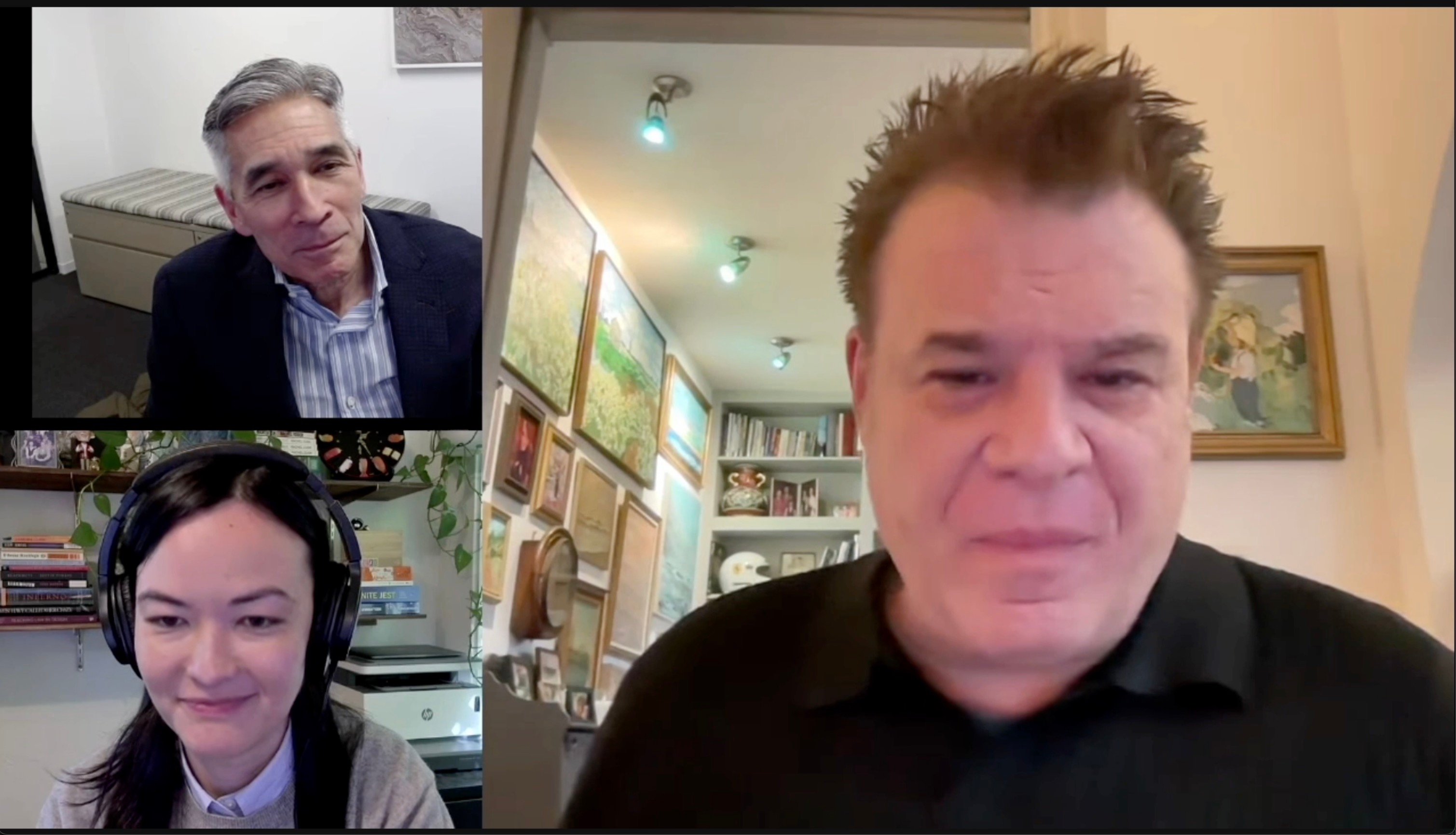

I was recently invited by Perkins Coie—one of the most respected litigation firms in the country—to join their Persuasion Occasion podcast.
We covered a wide range of topics on jury decision-making, trial strategy, and persuasion.
But one idea stood out—because it runs directly against how most lawyers are trained to think:
“Fear wins. When fear is up against logic, fear wins.”
If you try cases for a living, that statement should matter to you.
Because it explains why strong, logical cases sometimes lose—and why weaker cases sometimes win.
The Problem with the “Rational Jury” Model
Lawyers are trained to believe that juries are rational decision-makers.
We’re taught to:
- Build logical arguments
- Present evidence clearly
- Establish causation step-by-step
- Trust that the “better case” will prevail
That model is clean.
It’s also incomplete.
As I explained during the conversation with the litigation team at Perkins Coie:
“Humans are susceptible to being influenced by fear… it’s well known, it’s well understood.”
Jurors are not logic processors.
They are human beings making a consequential decision under uncertainty.
What Jurors Are Actually Doing
When jurors deliberate, they are not simply asking:
- Who made the better argument?
- Which expert was more credible?
They are asking something much more fundamental:
- What happens if we get this wrong?
- Is there risk in this verdict?
- Will this decision lead to harm?
That’s not logic.
That’s risk assessment driven by emotion—specifically, fear.
Why Fear Is So Powerful in Jury Decision-Making
Fear has a structural advantage over logic.
- Logic requires certainty
- Fear requires only doubt
A juror doesn’t need to be fully persuaded by the opposing side.
They just need to feel uncomfortable.
Once that happens, even a well-constructed, evidence-based argument can lose traction.
This is why fear-based narratives—whether explicit or subtle—play such a central role in trial outcomes.
The Reality of Trial Strategy
This isn’t theoretical.
It’s something trial lawyers confront every day.
As I noted in the discussion:
“We will use it in trial when that tool is available to us.”
And particularly in certain plaintiff strategies:
“We’ll play up the scary role… we will use the reptile strategy.”
That’s not criticism—it’s acknowledgment.
Fear is already present in most cases:
- Fear of future harm
- Fear of repeated conduct
- Fear of systemic risk
The question is not whether fear exists.
The question is whether you’ve addressed it.
Where Defense Teams Often Go Wrong
One of the most common strategic mistakes—especially in complex litigation—is over-reliance on logic.
Defense teams often assume:
- If causation is weak → they’re safe
- If the facts are strong → they’ll win
But jurors don’t evaluate cases like judges.
They evaluate comfort.
If a juror feels even a small amount of unresolved risk, that discomfort can override otherwise strong legal arguments.
A Better Framework for Persuasion
Instead of asking:
“How do we prove our case?”
A more effective question is:
“What is the juror afraid of—and have we addressed it?”
That shift changes everything.
Because once fear is:
- Acknowledged
- Contained
- Reframed
…jurors become far more receptive to logic.
This Isn’t About Manipulating Juries
It’s important to be clear about this.
Recognizing the role of fear is not about exploiting it.
It’s about understanding how decisions are actually made.
Effective advocates:
- Identify perceived risks
- Address them directly
- Give jurors a reason to feel confident in their verdict
When you do that, you’re not replacing logic.
You’re creating the conditions where logic can finally work.
Watch the Full Conversation
This clip is just one portion of a broader discussion with the litigation team at Perkins Coie.
If you want to explore how juries really think—and how trial strategy should adapt—you can listen to the full podcast here:
👉 https://perkinscoie.com/insights/podcast/ken-lopez-persuadius-explains-what-actually-persuades-jury
Final Thought
You can have:
- The better facts
- The stronger expert
- The more logical argument
And still lose.
Because juries don’t decide cases in a purely logical framework.
They decide them in the presence of uncertainty.
And in that environment:
Fear doesn’t just influence the verdict.
It often determines it.
Related Persuadius Articles
-
How Often Are Cases Decided on Facts vs. Emotion? The Critical Role of Jury Consultants
- The Top 10 Tricks for Using Storytelling for Persuasion in Litigation
- Repelling the Reptile Trial Strategy as Defense Counsel - Part 1
- When a Good Trial Team Goes Bad: The Psychology of Team Anxiety
- The Role of Emotional Factors in Enhancing Visual Information in Legal Presentations
- Free Persuadius Consulting Webinar: Persuasive Storytelling for Litigation

Leave a Comment