

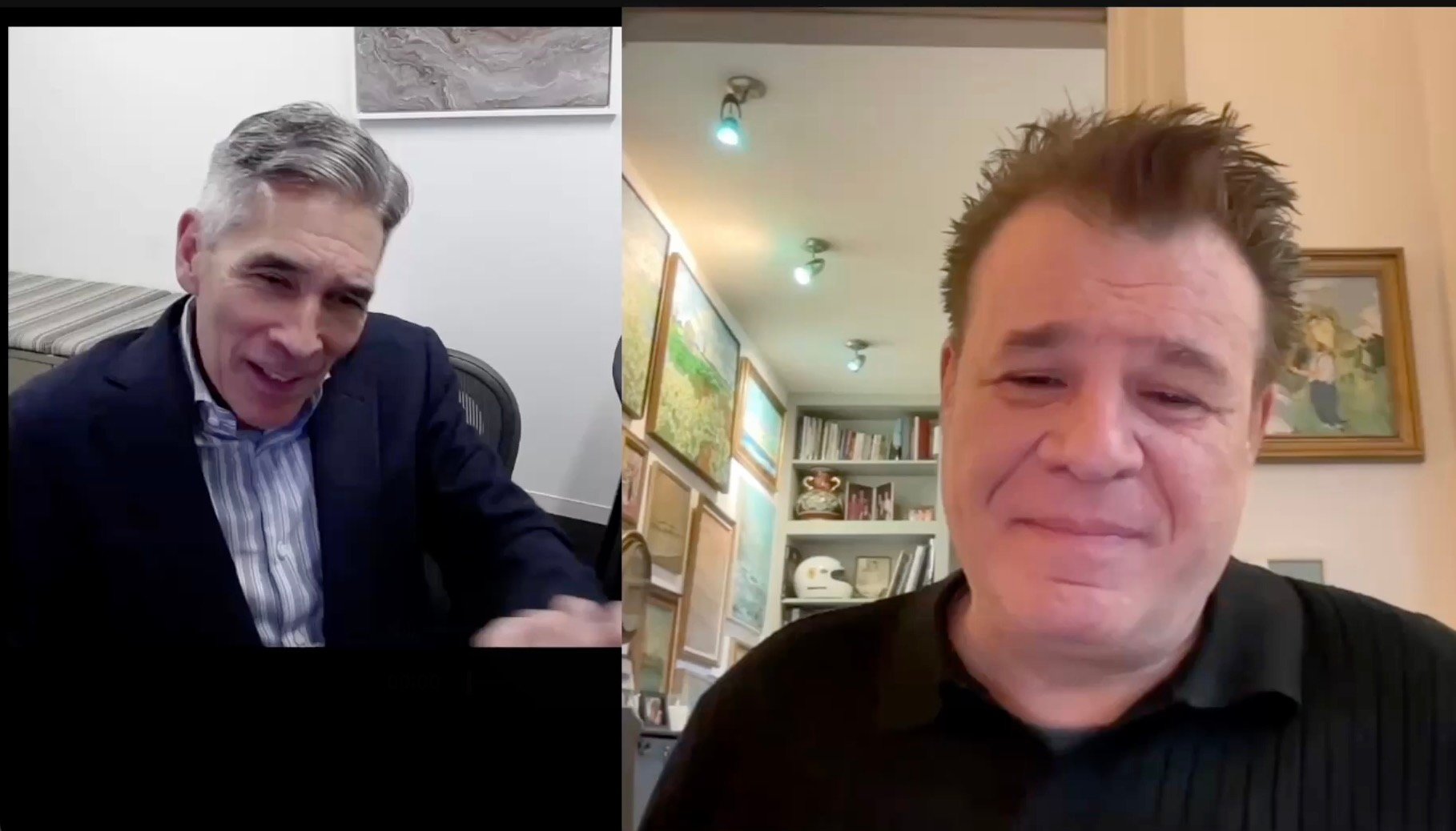

In Part 1, I explored a counterintuitive truth: fear often beats logic in the courtroom.
That conversation—featuring litigators from Perkins Coie—pulled back the curtain on how juries actually process information, not how lawyers wish they did.
But there was another idea in that discussion that may be even more important.
And it’s one that the very best trial lawyers in the world quietly rely on:
They strip their cases down to the bare essentials.
The Dirty Secret of Great Trial Lawyers
There’s a misconception that great lawyers win because they are more sophisticated, more detailed, more exhaustive.
In reality, the opposite is often true.
During the podcast, I referenced two of the most effective trial lawyers alive—Mark Lanier and David Boies—and what they do differently:
They make cases almost impossibly simple.
Not because they can’t explain the complexity.
Understand the jury can’t absorb it.
As I explained in that conversation:
They take cases down to their basic elements… just what you need to know. They drop all the names, every extraneous piece of data.
That’s not dumbing it down.
That’s precision.
Here’s a short clip from the podcast interview:
The Lawyer’s Instinct (That Hurts You)
Most lawyers do the exact opposite.
They:
- Add more facts
- Add more names
- Add more timeline detail
- Add more legal nuance
Because somewhere deep down, complexity feels like credibility.
“If I show everything, they’ll see how strong this case is.”
But juries don’t experience your case the way you do.
You’ve lived with it for:
- Months
- Sometimes years
They get:
- A few hours
- Maybe a few days
And they’re expected to make sense of it all.
That gap is where cases are won—or lost.
The Jury’s Reality
Jurors are not:
- Case experts
- Industry insiders
- Legally trained analysts
They are storytellers under pressure.
And they’re asking themselves one question:
“What actually happened here . . . in a way I can remember?”
If your opening statement doesn’t answer that simply, they will build their own version.
Or worse . . .
They’ll adopt your opponent’s.
The Memory Test: A Brutal Standard
Here’s the test I want every lawyer to apply to their opening:
Could a juror retell your case—accurately—in two minutes during deliberations?
Because that’s exactly what will happen.
As we discussed on the podcast:
- The foreperson will retell the story
- Other jurors will repeat pieces of it
- Arguments will be reconstructed from memory
And the version that survives is not the most complete.
It’s the most retellable.
The Power of “Retellable” Stories
The best trial lawyers don’t just present a case.
They equip jurors to persuade each other.
That means giving them:
- Simple themes
- Memorable language
- Visual hooks
- Easy comparisons
As I said in the interview:
You want to create a story that people can retell . . . you’re giving them tools to persuade other jurors.
That’s the real game.
Why Simplicity Wins (Every Time)
Imagine two opening statements.
Lawyer A:
- 47 names
- 12 dates
- 6 legal theories
- Dense PowerPoint
Lawyer B:
- One clear story
- Three key moments
- One unforgettable analogy
Now fast-forward to deliberations.
Which version survives?
Which one spreads?
Which one feels true?
Jurors don’t choose the most detailed story.
They choose the one that:
- Makes sense
- Feels coherent
- Can be repeated
Simplicity Is Not Easy
Here’s the irony:
Simplifying a case is harder than explaining it.
It requires:
- Judgment about what doesn’t matter
- Confidence to leave things out
- Discipline to resist over-explaining
And most importantly:
Respect for the jury’s cognitive limits
The lawyers who master this aren’t less sophisticated.
They’re more.
A Practical Framework for Simplifying Your Opening
If you want to apply this immediately, start here:
1. Identify the Core Story
Not the legal theory.
The story.
- Who did what
- Why it matters
- What went wrong
2. Eliminate Everything Non-Essential
Ask:
- Does the jury need this to understand the story?
- Or does only a lawyer think this matters?
Cut aggressively.
3. Build One Memorable Spine
Create a simple structure:
- Beginning
- Conflict
- Resolution
If jurors can’t follow that arc, they won’t follow anything.
4. Add One or Two “Retellable” Moments
These are the hooks:
- A vivid comparison
- A simple phrase
- A visual they can describe
Think: “sledding down the side of the pyramids”—the kind of image that sticks and spreads. See Persuasion Pairing: Cleverly Combining Words and Pictures.
5. Pressure-Test for Retellability
Have someone unfamiliar (ideally, a mock jury) with the case hear your opening and then:
Ask them to explain it back to you.
If they can’t. . .
The jury won’t.
The Strategic Advantage You’re Missing
Here’s what makes this so powerful:
If your case is simple . . .
And your opponent’s is complex…
You don’t just have a better story.
You have the only story the jury can use.
And once that happens, deliberations tilt in your favor before they even begin.
Final Thought
The best trial lawyers in the world—like Mark Lanier and David Boies (and most of Persuadius' clients)—aren’t winning because they know more.
They’re winning because they say less.
But what they say…
Sticks.
Simplify Your Case Before the Jury Complicates It
Most trial teams don’t lose because their case is weak.
They lose because their case is too complex to be remembered.
At Persuadius, we help litigators:
- Distill complex cases into clear, persuasive narratives
- Craft opening statements jurors can actually retell
- Build visual strategies that reinforce—not overwhelm—your story
If you’re preparing for trial, now is the time to simplify.
👉 Book a free 15-minute case consultation with a litigation consultant:
https://calendly.com/kenlopez/15-minute-case-consultation
Or send a confidential inquiry:
confidential@persuadius.com
You may also find these Persuadius resources valuable:
- Why Fear Beats Logic in the Courtroom (Part 1)
https://persuadius.com/blog/why-fear-beats-logic-in-the-courtroom-insights-from-a-perkins-coie-podcast-part-1 - The Impact of Cognitive Bias on Jury Interpretation and Persuasion
https://persuadius.com/blog/the-impact-of-cognitive-bias-on-jury-interpretation-and-persuasion - Could Surprise Be One of Your Best Visual Persuasion Tools?
https://persuadius.com/blog/bid/70961/could-surprise-be-one-of-your-best-visual-persuasion-tools - 21 Secrets From an Opening Statement Guru
https://persuadius.com/blog/21-secrets-from-an-opening-statement-guru - 5 Ways to Maximize Persuasion During Opening Statements - Part 1
https://persuadius.com/blog/5-ways-to-maximize-persuasion-during-opening-statements-part-1 - Storytelling for Litigators (Free eBook)
https://persuadius.com/storytelling-for-litigators-edition-ebook-5th - Opening Statement Toolkit (Free eBook)
https://persuadius.com/the-persuadius-opening-statement-toolkit-ebookv2-download

Leave a Comment